
There was a certain existential dynamic when I dropped the jigsaw puzzle, undoing all the days of hard work searching for and linking neighboring pieces. It was a puzzle of Edvard Munch’s “The Scream.” As the pieces hit the floor and scattered, my horrified reaction seemed appropriate. Certainly, for the hours of effort now undone, but also for the sense that, given the puzzle’s image, I might have crossed some kind of matter-ending Rubicon, akin to bringing together matter and anti-matter – or Oprah and Donald Trump. It was like crossing the River Styx in an inner tube.
The puzzle was a Hanukkah gift to my wife, who understood that the offering was really about me and not her. Ever since the teacher of the college art History Class I took, posted it on the large screen, the painting has represented a core element of my Weltanschauung. (I like to use the word Weltanschauung as it (1) is all I remember from my philosophy classes in college (2) It provides a reassuring, if not somewhat facile attempt to convince myself that I have a basic level of literacy, and (3) with the benefit of spell check and online dictionaries, I can finally use it with some level of assurance that I won’t embarrass myself.)
As I picked up the small pieces of swirling yellow, orange and red, representing elements of an ominous sky, I wondered what it might be like to meet Evard, and whether he would be a good choice to invite to a dinner party, or in our case, our upcoming Passover seder. My guess is that he would scorn the notion that ten plagues were really that bad. Recognizing that the Hebrew word for the land of the Pharaohs is “Mitzraim” meaning “the narrow places”, he might say that he would be most comfortable remaining there. He would then eat all the bitter herbs on the table and head for the wharf.
According to Wikipedia, Munch’s “childhood was overshadowed by illness, bereavement and the dread of inheriting a mental condition that ran in the family.” As it turns out, “The Scream” may have been one of his more upbeat paintings. Chances are, none of us would be willing to spend time on a jigsaw puzzle of his painting “Despair.”
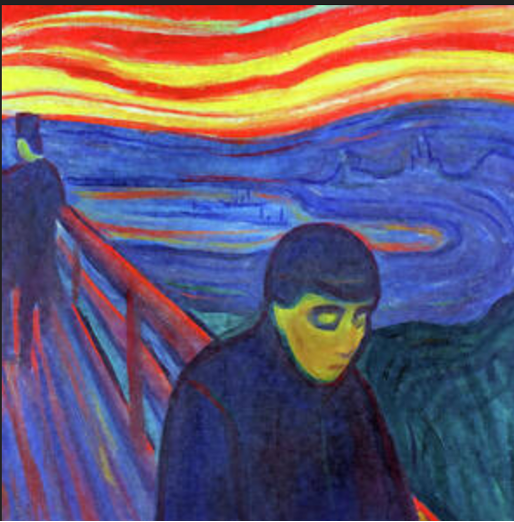
I’m undecided on whether we will, once again, search out small pieces of “The Scream” to bring them together into a uniform, if not disturbing, whole.
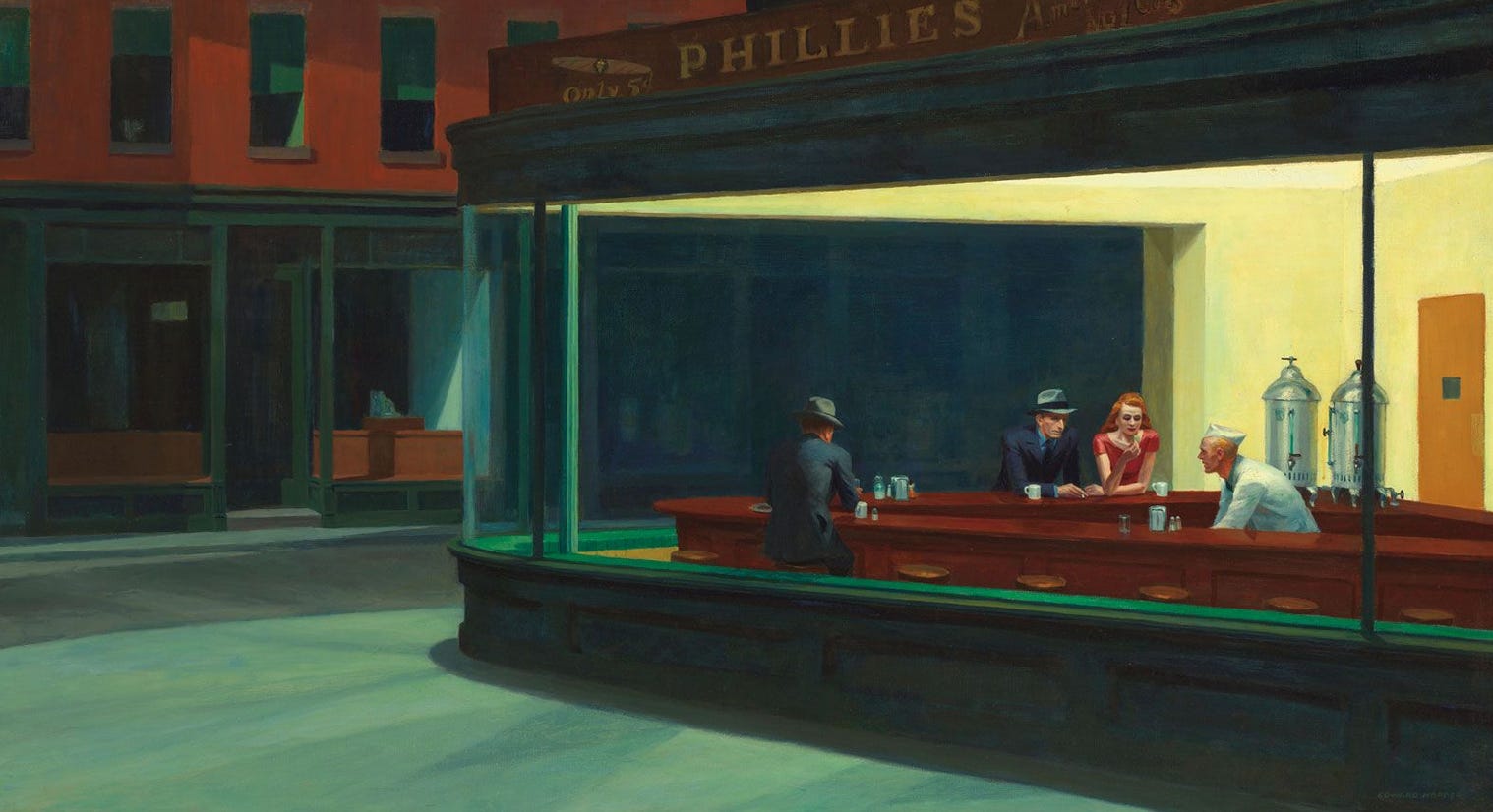
If there is a useful metaphor for doing jigsaw puzzles, it is that putting your life together takes time and patience. It takes stamina and concentration to find all the right pieces and, accept that, more often than not, elements that seem to fit together do not– no matter how much you force them. Of course, after hours of effort, when all this is done, most would choose to end up with Matisse’s “The Dance” or Monet’s “Water Lilies”. But, for me, I’m thinking Van Gogh’s “Self Portrait - With Bandaged Ear” or, if I’m feeling upbeat, Edward Hopper’s “Nighthawks”. Misery loves company.


No comments:
Post a Comment